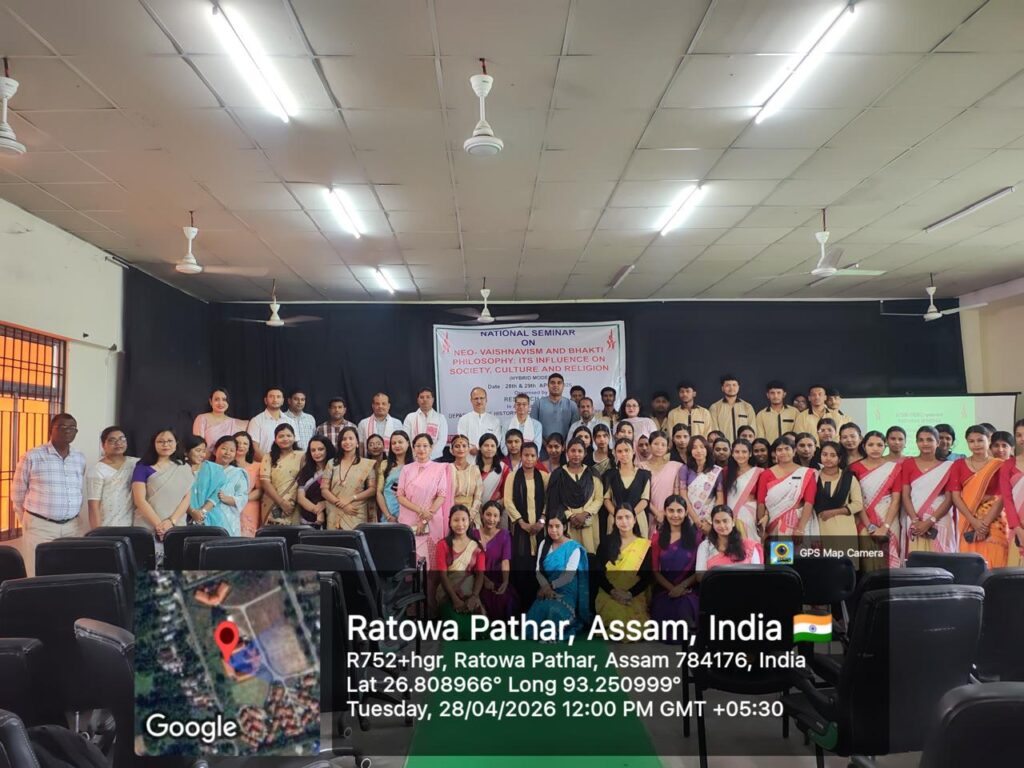
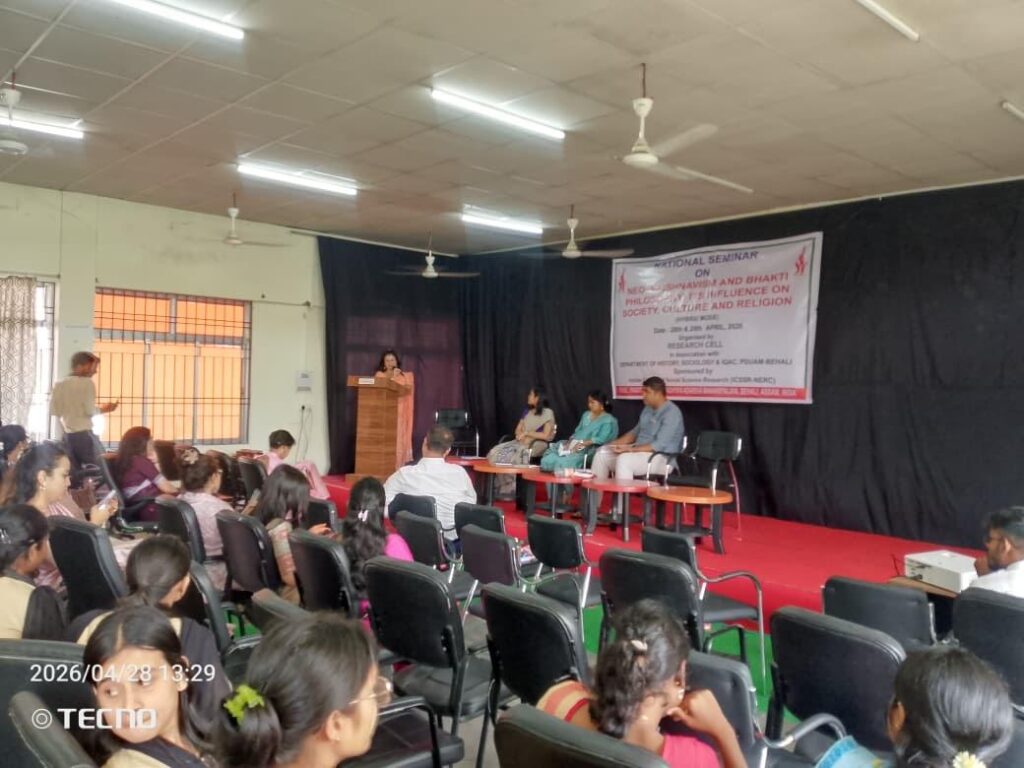
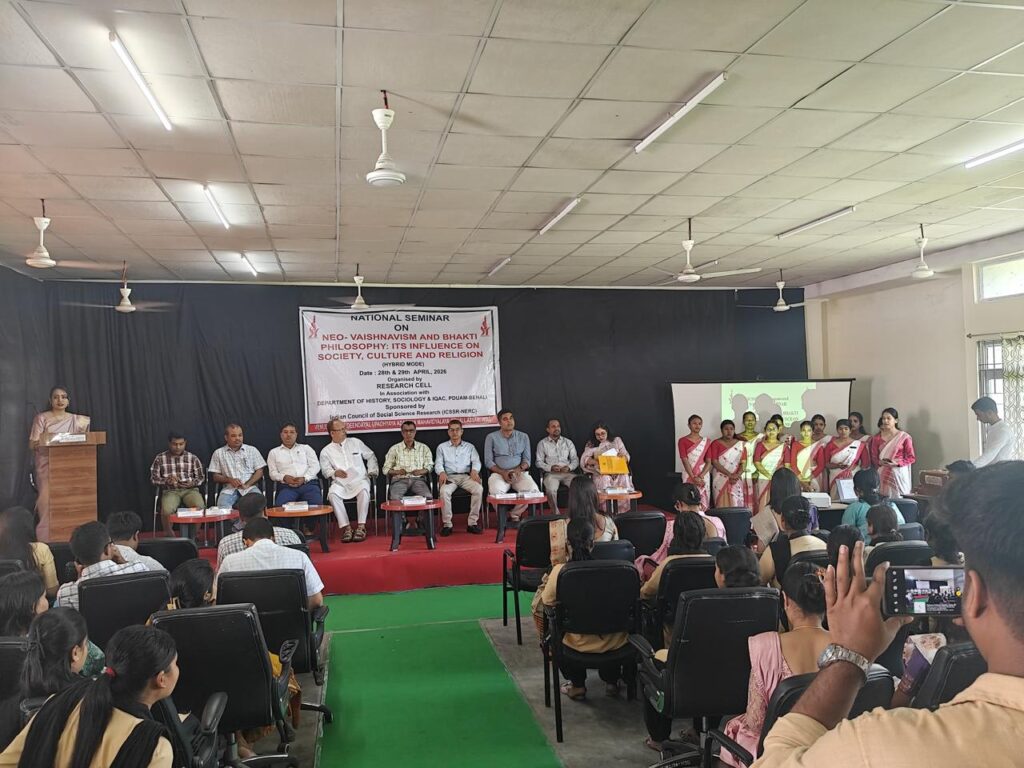
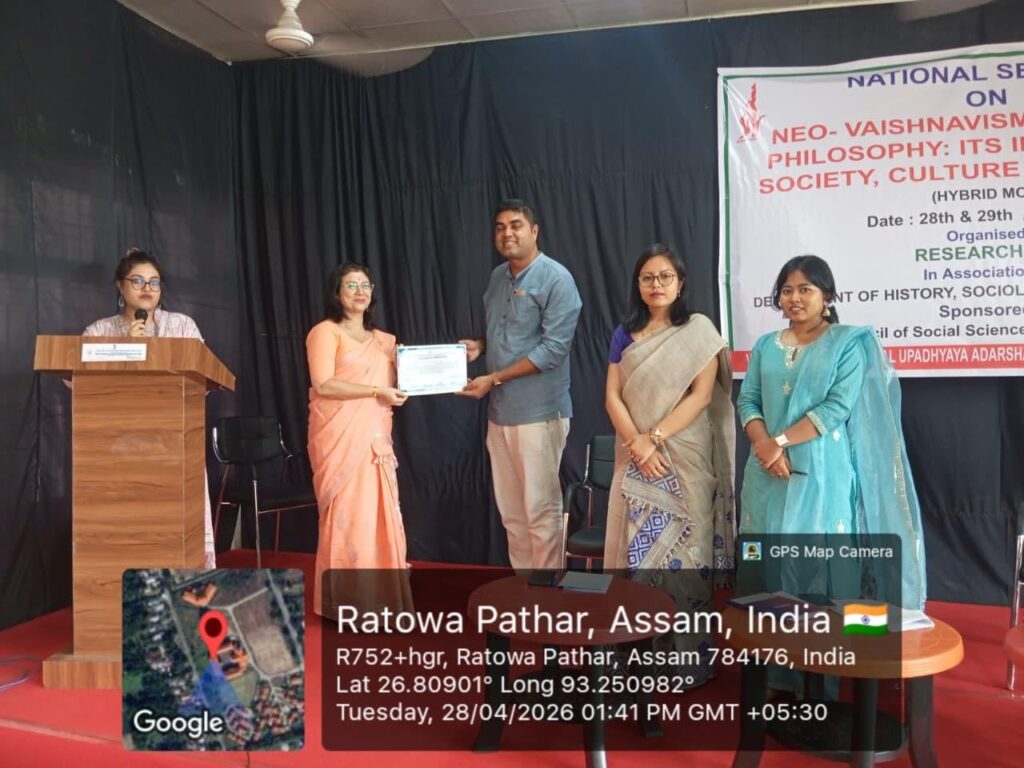
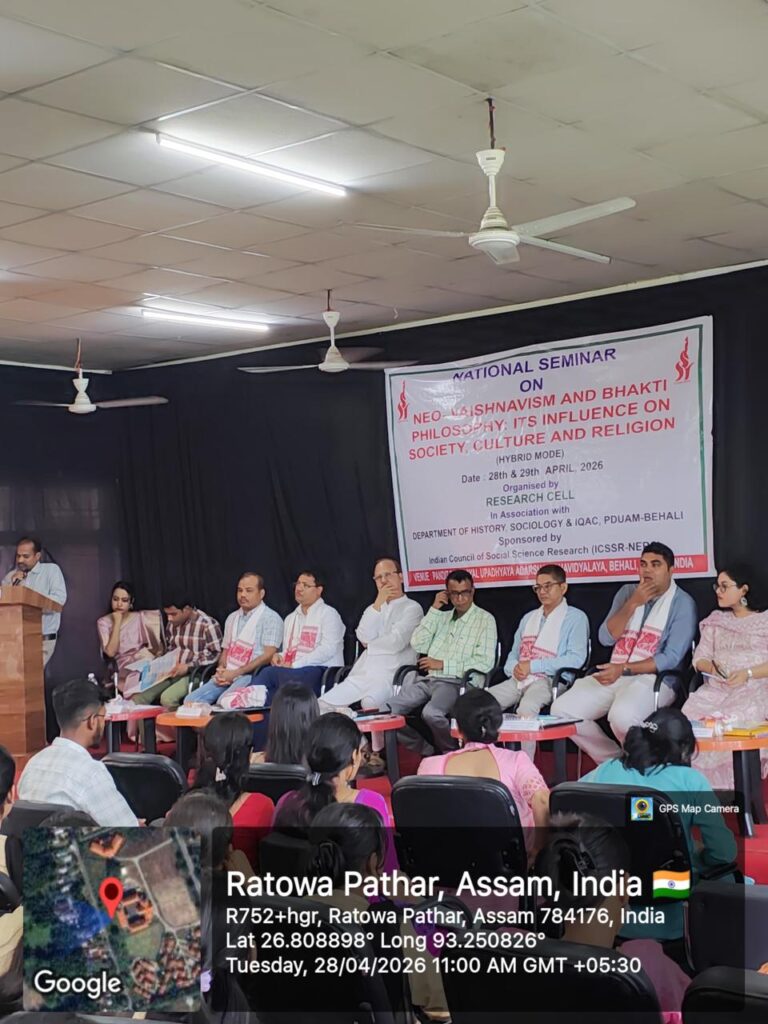
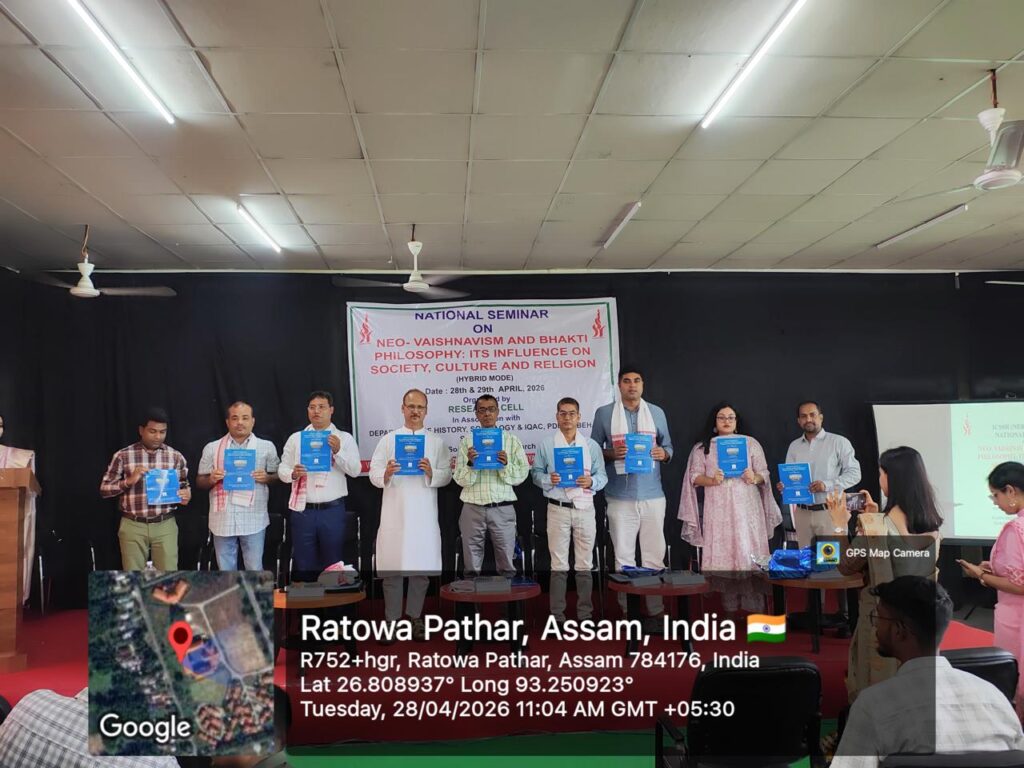
The Research Cell, in association with the Departments of History and Sociology, IQAC, Pandit Deendayal Upadhyaya Adarsha Mahavidyalaya, successfully organized a National Seminar on “Neo-Vaishnavism and Bhakti Philosophy: Its Influence on Society, Culture and Religion” on 28th and 29th April, 2026 in hybrid mode, sponsored by the Indian Council of Social Science Research (ICSSR).
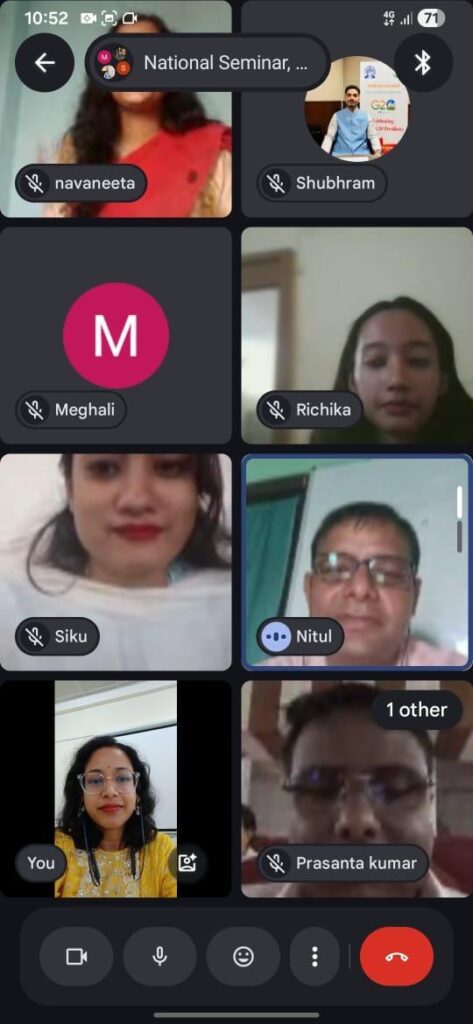
The seminar brought together scholars, academicians, researchers, and students from different parts of India for meaningful academic exchange and interdisciplinary discussion on the historical, sociological, cultural, and religious dimensions of Neo-Vaishnavism and Bhakti traditions. A total of 82 research papers were selected and presented through both offline and online sessions, reflecting wide national participation and scholarly engagement.
The two-day programme provided an important platform for critical deliberation on the legacy of Srimanta Sankardev and the continuing relevance of Neo-Vaishnavite thought in understanding contemporary society, identity, education, and cultural transformation. The discussions covered a range of themes including Bhakti philosophy, satras and namghars, social equality, indigenous communities, gender, youth, and heritage.
The institution expresses sincere gratitude to all resource persons, presenters, participants, organizing members, and supporting staff whose cooperation contributed to the successful completion of the seminar.